Choosing
Rechargeable vs disposable hand warmers: heat, hours and what a winter of use adds up to
A disposable pack, a refillable fuel warmer and a rechargeable one all end up in the same coat pocket. They part ways on four questions: how the heat starts, how far you can turn it down, what you throw away in March, and what the airport lets through.
Three ways to put heat in a pocket
You have three families of hand warmer to choose from, and each one makes its heat a different way. The air-activated pack, the kind HotHands sells by the pair, holds iron powder that warms as it rusts. The refillable warmer, such as the Zippo 12-Hour Refillable Hand Warmer, burns lighter fuel slowly on a catalytic burner, with no flame once it is lit. The rechargeable warmer carries a lithium battery and an electric heater, and that is the family the UNIHAND pair belongs to.
The differences show up in your day rather than on the box. A pack starts the moment you tear the pouch and keeps going until it is spent, needed or not. A fuel warmer asks you to fill it and light it before you leave the house. A rechargeable needs a cable and an outlet the night before, then answers a button for as long as the charge lasts.
None of this makes one family right for everyone. Picture three people. A hunter sits in a stand from before dawn to dusk. A commuter walks to the train twice a day, ten minutes each way. A parent spends two hours on a cold bleacher every Saturday in November. Each of them gets a different answer, and the table below shows why.
| Air-activated pack | Refillable catalytic warmer | Rechargeable warmer | |
|---|---|---|---|
| What makes the heat | Iron powder rusting in air | Lighter fuel on a catalytic burner, no flame after lighting | A lithium battery feeding an electric heater |
| How you start it | Open the sealed pouch | Fill to the line, wait, hold a flame to the burner | Press the button |
| Heat settings | None | None in the maker's instructions | Levels on the button, three on the UNIHAND pair |
| Between outings | Open a new pack | Refill from a can of lighter fuel | Recharge, by USB-C on the UNIHAND pair |
| After the season | Used packs go out with the garbage | Burner replaced from time to time | Battery goes to a recycler at the end of its life |
| On a US flight | Allowed in a carry-on and in a bag you check | Lighter fluid not allowed in either bag | Carry-on, or powered off and protected in a bag you check |
Most of the choice comes down to two things you already know about your own winter. How long is each cold stretch, and how many of them come in a season? Hold those two numbers in mind as you read on.
What happens inside a disposable pack
HotHands lists the contents of each of its hand warmers as iron, water, vermiculite, charcoal, polymer and salt. That mix does nothing while the pouch stays sealed in its wrapper. Once you open it, air reaches the iron and the iron begins to rust. Orbax, the science communication officer at the University of Guelph, described the process to The Weather Network as oxidation, basically rusting. The rust gives off heat as it forms.
The pouch itself does part of the work. Orbax described the fabric as microporous, full of tiny holes, so oxygen seeps in at a steady rate instead of all at once. HotHands calls the result consistent heat, and gives its hand warmers up to 10 hours of heat at an average temperature of 135 °F.
There is no dial and no off position. The reaction runs until the ingredients are spent. Orbax put the end down to the iron rusting through or, more often, the water and salt running out. Then the pack cools and its life is over. HotHands describes its warmers as single-use, and the instructions on its 40-pair bulk pack say to dispose of them with regular garbage after use.
That simplicity is the pack's great strength. You need no outlet, no fuel can and no instructions beyond tearing the wrapper. HotHands says its warmers stay shelf-stable for several years from the date they were made, so a box in the glove compartment or the emergency kit waits quietly until the day you need it. A pack weighs almost nothing, and HotHands sizes it for slipping into gloves, mittens or a gear bag.
The cost of that simplicity is control. Once you open a pack at seven in the morning, it keeps heating through the warm car, the heated office and the lunch indoors, and you cannot pause it for the walk home. You also cannot turn it down when it feels too warm against your palm, or up when the wind picks up. For a single long day outside, that hardly matters. For a winter of short trips, every hour of heat you did not need is a pack you will open again tomorrow.
Refillable warmers: lighter fuel and a catalytic burner
A refillable warmer swaps the pouch of iron for a metal case filled with absorbent material and a catalytic burner on top. Zippo's help pages cover refillable warmers in 6-hour and 12-hour sizes, and its product page gives the 12-hour model up to 12 hours of heat. The fuel is lighter fluid, and Zippo says the warmer heats by a catalytic process, with no flame once it is lit.
Zippo's own help pages lay out the routine, and it is worth reading before you buy one, because it is the part people forget to picture. In order, as Zippo gives it:
- Wait until the warmer is cool, take off the lid and lift out the catalytic burner unit.
- Pour lighter fuel into the plastic filling cup up to the line, about 12 hours of heat for the 12-hour warmer, and never above it.
- Pour the fuel slowly into the filling hole while you keep the warmer upright, then seat the burner again.
- Wipe off any spilled fuel, let it evaporate, and let the warmer stand upright for at least two minutes so the fuel spreads through the absorbent material.
- Hold a flame to the burner for about 10 seconds. Once it catches there is no flame, only heat.
- Put the lid back on and slide the warmer into its fabric bag, which Zippo says it must always be in to prevent overheating.
Zippo adds two warnings that tell you a lot about living with one. A flame that stays after lighting means you overfilled it, and you need to put it out and let the extra fuel evaporate. And laying the warmer down between filling and lighting can let liquid fuel reach the burner, which may cause a flame when you light it.
In return you get a long burn from one fill, in a durable metal case. Zippo's 12-hour model measures 3.9 x 2.6 x 0.5 inches and weighs 0.16 lb, and it comes with its warming bag and filling cup. The burner itself wears out, though. Zippo says the catalytic element must be replaced periodically and sells replacement burners for that reason.
How long it runs is set by the line on the filling cup, not by a switch, and neither the product page nor the help pages name a heat setting. Zippo's product page gives no temperature for the refillable models either. If you like a ritual, do not mind handling lighter fuel and spend long days in one place, such as a deer stand or an ice-fishing shanty, this family suits you well. If you want heat for twenty minutes at a time, it asks a lot of preparation for very little warmth.
Rechargeable warmers: a battery, a heater and a button
A rechargeable warmer moves the fuel inside. A lithium battery feeds a small heating element under the shell, and a button decides how much power goes to it. You charge it from a cable, carry it out, press the button when your hands need it and press again when they do not. Between those presses, nothing is being used up.
Makers set out their own levels and hours, and you can only compare them on each maker's published figures. Zippo's HeatBank 9s, for example, lists dual-sided heat up to 120 °F, six heat settings and up to 9 hours of run time, and it also charges phones and other USB devices from the same battery.
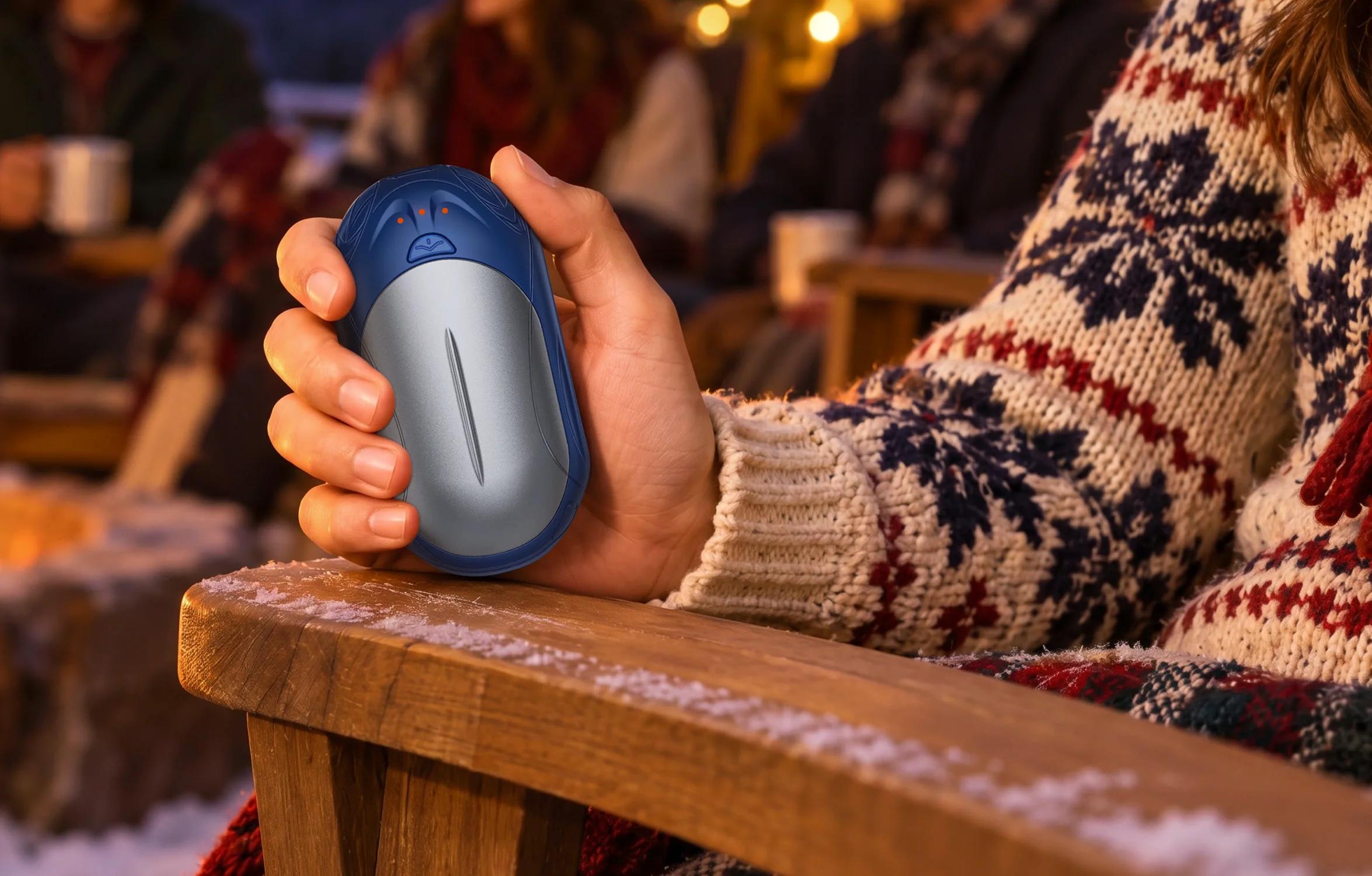
The UNIHAND pair works on the same principle in two pebble-shaped units, each 3.46 x 1.84 x 0.79 inches and about 0.15 lb. Each unit has one orange button and a row of three small lights beside it. The orange button turns it on and steps through the three levels, and the card in the box shows the exact presses. A temperature sensor and controller in each unit, which we call the AI chip, reads the temperature between the warmer and your hand and holds the level you chose. The heat levels page explains each light in more detail.
| Red lights | Level | Temperature | Hours per charge, up to |
|---|---|---|---|
| One | Low | 95-107.5 °F | 20 |
| Two | Medium | 104-118.5 °F | 14 |
| Three | High | 118.5-130 °F | 8.5 |
Those hours are the brand's figures per level, and they are a ceiling, not a promise. Cold air, wind and how often you switch the unit on all change what you get on a given day. Our guide to getting 20 hours from a rechargeable warmer covers what pulls the number down and what keeps it up.

Two units change how you use the heat. You can keep one in each pocket, hand one to the person next to you, or put the two back to back, where they join into one palm-sized warmer that heats all the way around. Both charge by USB-C, and a USB-C cable comes in the box.
What you can switch, set and stop
Control is where the three families differ most, and it is the difference you notice on the second day rather than the first. With a pack, your only decision is when to open it. With a fuel warmer, your decision is how much fuel to pour, made in the kitchen before you leave. With a rechargeable, you decide all day long, every time your hands go cold or warm up again.
That has a practical side you can count. Say you open a pack at the trailhead and stop for an hour in a heated lodge. The pack runs through that hour in your pocket. A rechargeable sits off on the lodge table and keeps its charge for the afternoon. The same goes for the drive to the course, the meeting between two walks or the warm car between hunting spots.
Heat level matters in a quieter way. An average of 135 °F feels pleasant through a glove on a raw morning and can feel like too much in a bare hand on a mild one. With a pack you live with whatever it gives. With three levels you can start on High in the first cold minutes and drop to Low once your fingers come back, which also stretches the battery further.
Each maker publishes its own numbers on its own product page, and some leave a figure out altogether. Side by side, they look like this.
| HotHands Hand Warmers | Zippo 12-Hour Refillable | Zippo HeatBank 9s | UNIHAND pair, per unit | |
|---|---|---|---|---|
| Kind | Air-activated, single-use | Lighter fuel, catalytic burner | Rechargeable lithium-ion | Rechargeable lithium |
| Heat as published | Average 135 °F | No temperature given | Up to 120 °F | 95 °F on Low to 130 °F on High |
| Hours as published | Up to 10 | Up to 12 | Up to 9 | Up to 20 on Low, 14 on Medium, 8.5 on High |
| Heat settings | None | None named | Six | Three |
| Size | Not given | 3.9 x 2.6 x 0.5 in | 4.88 x 2.38 x 0.95 in | 3.46 x 1.84 x 0.79 in |
| Weight | Not given | 0.16 lb | 0.35 lb | 0.15 lb |
| Worth knowing | Shelf-stable for several years | Must stay in its fabric bag when lit | Also charges USB devices | Two units join into one |
Read the hours column with care. A pack's ten hours and a rechargeable's twenty are not the same kind of number. The pack gives its hours in one stretch from the moment you open it. A rechargeable gives its hours in whatever pieces you switch it on for, until the charge runs out. Our comparison page lays out the UNIHAND pair against other warmers line by line.
A winter of use, counted, and what it leaves behind
Prices change from week to week, so count packs instead of dollars. A pack warms one hand, so a pair of hands takes two packs per outing. Here is how that adds up for two kinds of winter.
Start with a skier who gets out on 20 days in a season. One HotHands pack runs up to 10 hours, which covers a day on the hill. That is 20 days x 2 hands = 40 packs, or 20 pairs, and 40 empty pouches in the trash by spring.
Now take the commuter with two cold walks a day, five days a week, from early December to the end of March. That is about 16 weeks, so 16 x 5 = 80 working days. A pack opened for the morning walk keeps heating through the workday, and by the evening walk ten hours later it is at the end of its rated 10 hours. Carry one pair a day and you open 80 x 2 = 160 packs across the season. Open a fresh pair for each walk and the count doubles to 320, most of whose heat goes into a desk drawer.
The same commuter with a rechargeable pair uses about an hour of heat a day, two walks of half an hour. On Medium, rated up to 14 hours, that is 14 days of walks per charge on paper. Over 80 days that comes to 80 / 14, or about six charges. Real cold, wind and a habit of leaving the warmer on will cut that, so plan on charging more often than the arithmetic says. The instructions page covers charging.

What each family leaves behind is just as countable. Used packs, as HotHands says, go out with the regular garbage. A fuel warmer leaves empty fuel cans and, every so often, a worn burner. A rechargeable leaves nothing at the end of each season. At the end of its working life it leaves one lithium battery, and that one needs care.
The EPA says lithium-ion batteries and the devices that contain them should not go in household garbage or curbside recycling bins, where they can be crushed and start a fire. It sends devices with built-in batteries to certified electronics recyclers, store takeback programs or your local household hazardous waste collection. Put each one in its own plastic bag or tape over the terminals. The Battery Network, the program long known as Call2Recycle, lists more than 20,000 drop-off locations and a finder on its site. Ask the drop-off whether it takes a device with the battery inside before you bring the warmers.
Taking each one on a plane
Flying sorts the three families quickly, and it is worth knowing before you pack for a ski trip. TSA's entry for hand warmers allows them in carry-on bags and in bags you check. That covers the air-activated packs, which HotHands also describes as TSA-approved. As with every TSA entry, the final decision rests with the officer at the checkpoint.
The refillable family is the awkward one. TSA lists lighter fluid as not allowed in carry-on bags or in bags you check, so the fuel cannot travel with you either way. Buy a can at your destination. We could not find a separate TSA entry for the catalytic warmer case itself, so ask your airline before you pack one, even empty.
A rechargeable warmer flies under the FAA rules for lithium batteries in personal devices. The FAA allows most rechargeable batteries and personal electronic devices in carry-on bags, within watt-hour limits. Batteries up to 100 Wh are allowed, those of 101 to 160 Wh need the airline's approval, and anything over 160 Wh is forbidden. The FAA says the watt-hour rating should be marked on the battery, and if it is not, you multiply the volts by the amp hours.
A device can go in a bag you check only when it is completely powered off and protected from being switched on by accident. Spare lithium batteries and power banks must stay in the cabin. The FAA recommends carrying every lithium-ion battery in the cabin, because any of them can overheat in a process called thermal runaway. Flight crews, the FAA notes, are trained to recognize and respond to a lithium-ion battery fire in the cabin.
In practice, carry the UNIHAND pair in your carry-on, switched off, and charge it the night before you fly so it is ready for the cold at the other end. If a battery in your bag starts to get hot, swell or smoke, the FAA asks you to tell the flight crew at once. Airlines can set stricter limits than the FAA, so a quick look at your carrier's own rules settles any doubt.
Where the UNIHAND pair sits among them
Set beside the other two families, our UNIHAND hand warmers are built for the kind of winter that comes in pieces. You get a commute, a round of golf, an hour at the stadium, then a long walk on the weekend. Three levels let you match the heat to the moment, from 95 °F on Low to 130 °F at the top of High. The longest figure, up to 20 hours per charge on Low, is a ceiling the cold will trim, not a promise.
The two units are the part no pack or fuel warmer offers. On a cold bleacher you can keep one and hand one to the child beside you. On the golf course, one sits in each front pocket, since each unit fits a jeans or golf-pant pocket. On the coldest walk you can join them back to back into one palm-sized warmer that heats all the way around. The golf page and the hunting page show how that plays out in each sport.
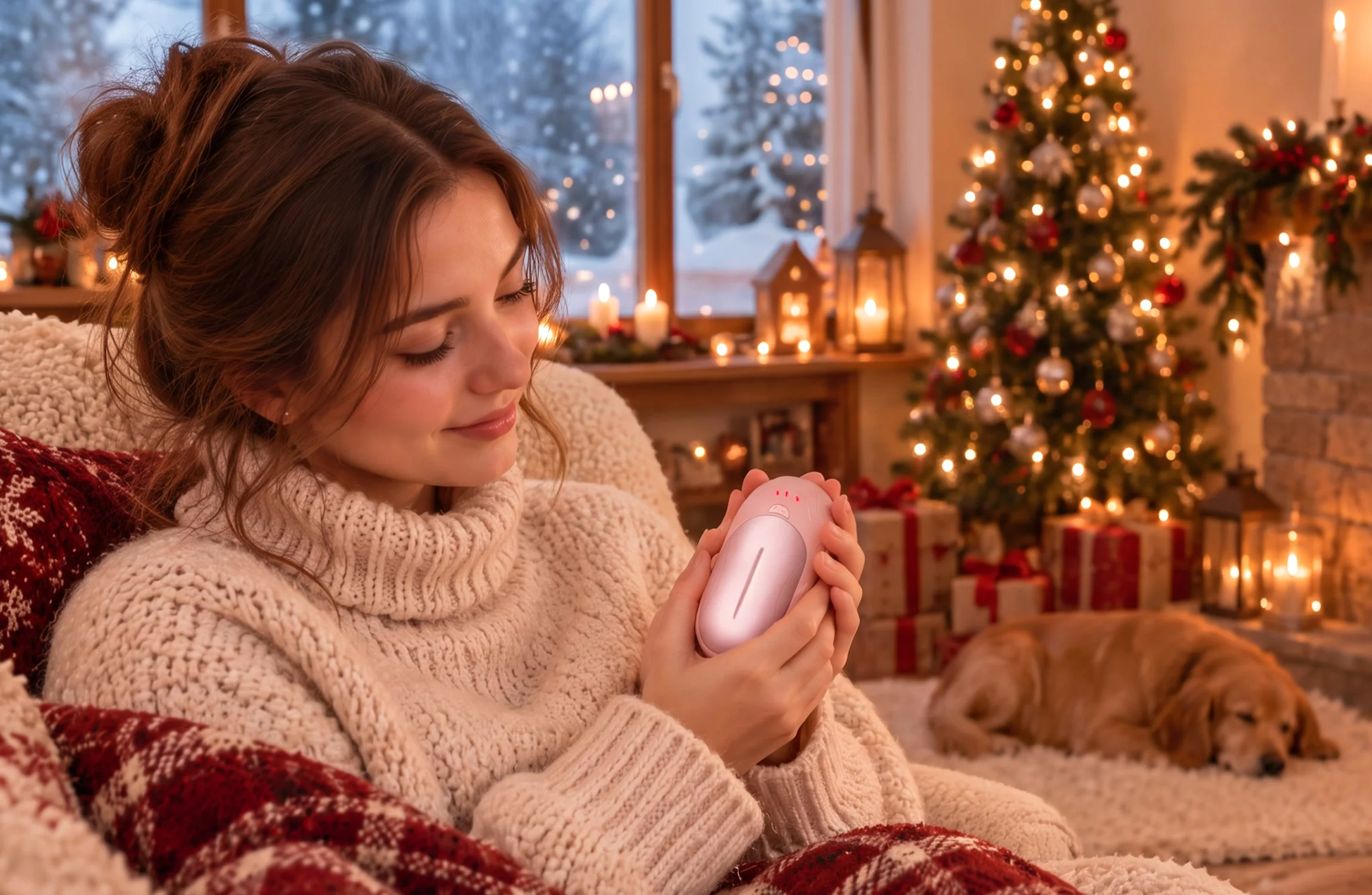
What you give up is the pack's indifference to outlets. A UNIHAND unit needs a USB-C charge before it can warm anything, and on a long trip without power it eventually runs down. It also asks a little care from you, as any lithium battery does, at charging time and at the end of its life. We have made this one pair since 2022, and every color carries the same unit inside, with the same three levels and the same hours.
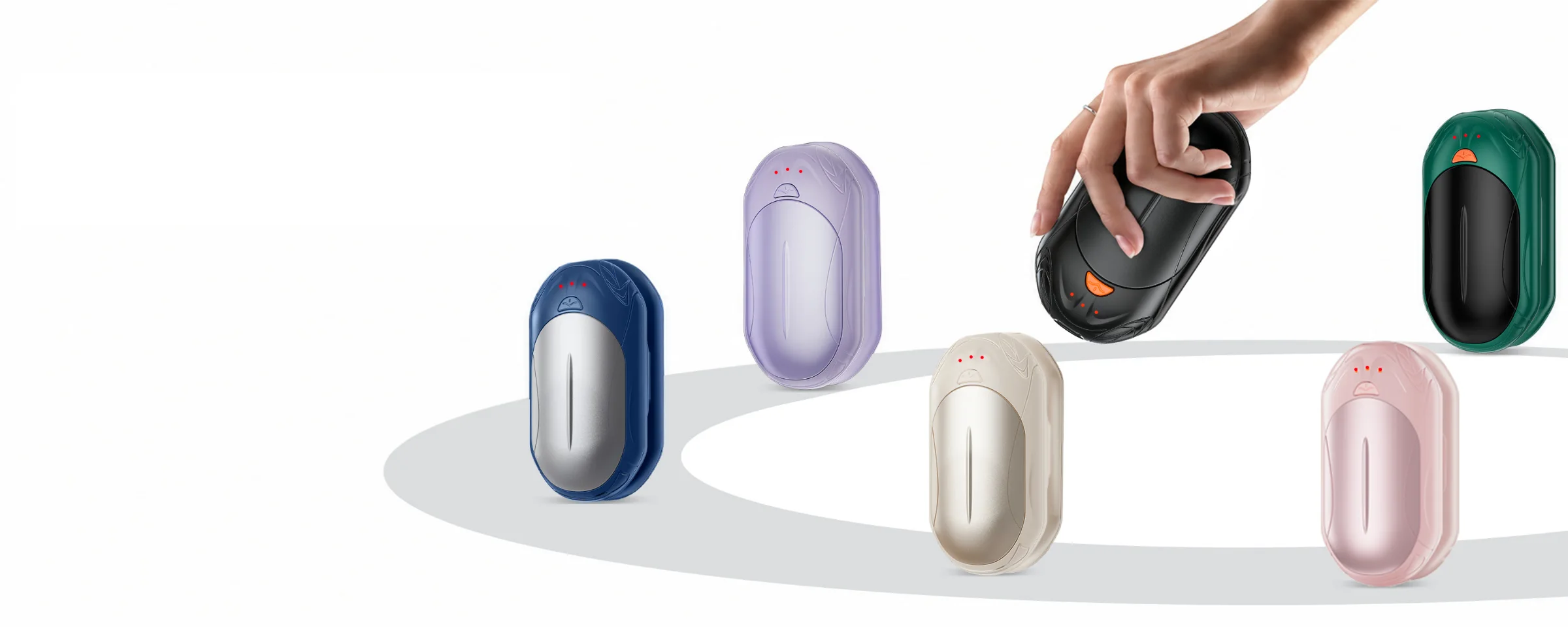
Some people choose their warmer by how it looks in the hand as much as by its hours, and on that count you have ten colors to pick from, from Black and Blue Grey to Pink and Mint Green. You can see all ten on the hand warmers page, and the colors page shows each shell and button up close. If the pair is a present, the gift page shows how it looks coming out of its box.
When a disposable pack is still the better pick
A rechargeable pair does not win every winter, and you should know where a box of packs serves you better.
The first case is when there is no way to charge. A week in a cabin without power, a long backcountry trip or a power cut after an ice storm all favor the pack. It needs nothing from you but a tear of the wrapper, and HotHands says it keeps for several years on the shelf. A few pairs in the car's emergency kit make sense even if a rechargeable lives in your coat.
The second is the one-off day. If your whole winter outdoors is a single parade or one playoff game, a pair of packs costs you no planning and no charging, and a warmer used once a year is easy to find flat in a drawer. The same goes for a group. A 40-pair bulk box hands warmth to a whole team or tour group in a minute, and nobody has to give anything back.
The third is the very long day at full heat. A day that runs past the battery at the level you need is the honest limit of any rechargeable. High on the UNIHAND pair is rated up to 8.5 hours, and a twelve-hour sit in a tree stand in hard cold can outlast it. Dropping to Low stretches the charge a long way, toward the brand's figure of up to 20 hours. But if you know you will want strong heat from dark to dark, a pack or two in the bag as backup for the last hours is sound sense.
There is also the matter of sharing heat with someone you will not see again. A pack can go to a stranger on the next seat, while a rechargeable unit is one you want back. Many people end up with both. They keep the rechargeable for the everyday and a few packs for the days that fall outside it.
If you are still weighing it up, our FAQ answers the questions people ask most about the UNIHAND pair. The guide to keeping hands warm outdoors covers gloves, layers and the rest of the kit that keeps a warmer from working alone.